
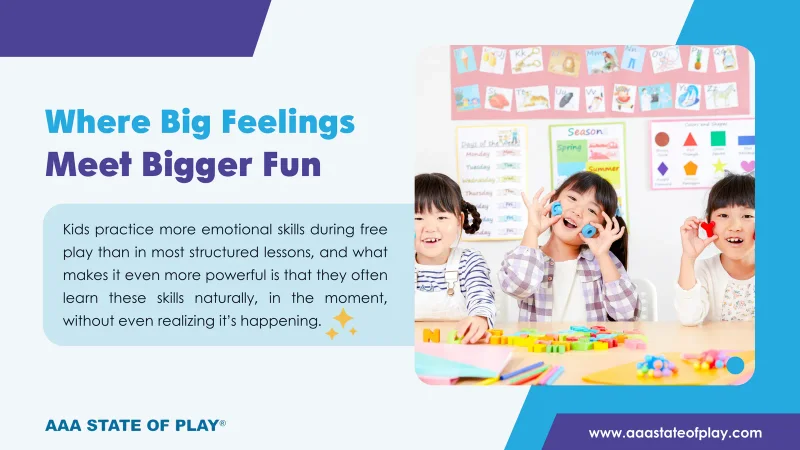
If you’ve ever watched a group of kids debate who gets the next turn on the slide, you’ve basically seen Social-Emotional Learning in action—just without the worksheets, bell schedules, or polite indoor voices. Playgrounds aren’t just where energy gets burned off; they’re where emotional intelligence gets built, friendships get tested, and teamwork becomes a daily adventure. It’s in these small everyday moments that big social skills begin to take shape, long before students return to the classroom.
These joyful snapshots of play set the stage for what is to come. At AAA State of Play, social-emotional learning playgrounds are some of the most powerful teaching tools a school can offer. With decades of experience designing durable, high-quality play environments, we’ve seen how the right equipment transforms recess into a living classroom where students practice communication, navigate big feelings, and discover how to belong.
Let’s explore how intentional playground design supports stronger, more connected learners—and how schools can turn simple playtime into meaningful growth.
Playgrounds as the First Training Ground for Emotional Intelligence
For many students, the playground is the first environment where they independently face emotional highs and lows—excitement, frustration, anticipation, disappointment, and triumph. These experiences aren’t accidental; they’re foundational. In fact, social-emotional learning playgrounds create the perfect setting for kids to explore these feelings in real time.
When children navigate play structures, they make micro-decisions about risk-taking, sharing space, waiting patiently, or trying again after a slip or stumble. A balanced combination of slides, climbers, and imaginative elements helps kids practice regulating their emotions in a safe, supportive environment.
For example, a child deciding whether to try the highest slide becomes a moment of emotional growth. Their success (or their decision to wait) reinforces self-awareness, confidence, and resilience—key pillars of social-emotional learning.
Where Conversations Come to Play
If classrooms build vocabulary, playgrounds build real-world communication skills—and they do it with far more enthusiasm than any worksheet ever could. Outdoor play is a natural social spark, and social-emotional learning playgrounds amplify that spark by giving kids countless opportunities to connect, collaborate, and communicate.
Group-focused structures—like multi-deck play systems, inclusive spinners, and cooperative climbers—invite children to talk, negotiate, and dream up new adventures together. The dialogue flows fast and freely:
- “Can you help me reach this bar?”
- “Want to build a game together?”
- “Let’s go down the slide at the same time!”
These spontaneous exchanges are where communication truly blossoms. At AAA State of Play, we design play systems that encourage teamwork and shared experiences, helping kids practice expressing ideas, listening actively, and coordinating with others. And the best part? The skills they pick up on the playground follow them straight back into the classroom—stronger, sharper, and ready to be used all over again.
Conflict Resolution Happens on the Playground, Not Just in Lesson Plans
Ask any teacher, and they’ll tell you: if you want to watch real conflict-resolution skills unfold, the playground beats the classroom every time. Conflicts are a natural part of growing up, but social-emotional learning playgrounds turn those bumps in the road into meaningful opportunities for kids to practice relationship skills that last a lifetime.
Playgrounds give children the space and opportunity to:
- Navigate disagreements
- Practice compromise
- Advocate for themselves respectfully
- Work through misunderstandings
- Build empathy for others
Take the classic situation where two kids want the same swing. A thoughtfully designed play space with multiple activity zones gives children alternatives, easing tension before it escalates. And when disagreements do happen, they often become powerful teachable moments. Kids learn that fairness doesn’t always mean sameness, that others have feelings too, and that solutions can be created together.
On the playground, conflict isn’t just a challenge. It’s a chance to grow.
Inclusive Play Spaces Teach Belonging and Compassion
Nothing builds empathy quite like playing alongside peers with different abilities, personalities, and experiences. Social-emotional learning playgrounds that prioritize inclusion send a powerful message to every child: you belong here.
Schools that incorporate accessible ramps, transfer points, sensory-rich panels, and ground-level activities create play spaces where all children can participate meaningfully. These inclusive features remove barriers, encourage social connection, and foster genuine compassion and understanding.
For instance, sensory play panels invite interaction between students of all abilities. A child using a mobility device can engage with peers at eye level, strengthening social bonds and helping classmates value diverse perspectives.
When playgrounds are intentionally designed for inclusivity, they become environments that nurture empathy, acceptance, and a deeper sense of community—core outcomes of meaningful social-emotional learning.
Confidence, Resilience, and Leadership Grow Through Active Play
Social-emotional learning isn’t just about understanding feelings or communicating clearly. It’s also about building the inner strength that helps children take on challenges, bounce back from setbacks, and step into moments of leadership. And few environments nurture that growth better than social-emotional learning playgrounds, where every piece of equipment becomes a new opportunity to rise, stretch, and discover what they’re capable of.
Outdoor play naturally supports confidence and leadership as students take healthy risks, set personal goals, and encourage their peers. A child attempting a challenging climb gains perseverance with every try. A student helping a friend navigate a tricky play structure practices empathy and leadership without even realizing it. And when a small group creates and runs a game together, they’re essentially forming a tiny leadership team in real time.
Playgrounds with varying difficulty levels—like net climbers, balance beams, and overhead bars—allow children to progress at the pace that feels right for them. Each new skill mastered becomes a confidence-building moment, shaping kids into resilient, self-assured learners who bring those strengths back into the classroom and beyond.
On the playground, growth isn’t quiet. It’s bold, it’s joyful, and it happens one brave step at a time.
Playgrounds That Build Connection, Confidence, and Community
When students feel safe, supported, and connected, they learn better, and intentional playground design plays a powerful role in creating that environment. A vibrant, thoughtfully structured play space becomes more than a place to run and climb. It becomes a hub where friendships grow, classrooms bond, and entire school communities feel more united. Schools that invest in high-quality equipment see the results everywhere: calmer classrooms, stronger peer relationships, and families who feel more engaged during after-school activities and weekend visits.
At AAA State of Play, we design playgrounds that bring social-emotional learning to life. From emotional growth and communication to resilience, leadership, and community-building, our durable, high-quality play environments support the whole child and the whole school. Ready to create a space where learning, connection, and joy come together?
Contact us today to explore our play systems, inclusive equipment, and design services, and let’s build a playground where every child thrives.
Your Next Steps to Building Stronger, Happier Playgrounds
- 28 Reasons Why Play Benefits Emotional Health and Development
/28-reasons-why-play-benefits-emotional-health-and-development/ - 30 Reasons Why Free Play Benefits Child Development
/30-reasons-why-free-play-benefits-child-development/ - A Guide To Inclusive Playground Design
/a-guide-to-inclusive-playground-design/ - The Importance of Inclusive Designs in Commercial Playgrounds
/the-importance-of-inclusive-designs-in-commercial-playgrounds/ - Enhancing Learning Through Commercial Playground Equipment
/enhancing-learning-through-commercial-playground-equipment/ - Which Playground Designs Help Reduce Bullying or Overcrowding
/playground-designs-reduce-bullying/