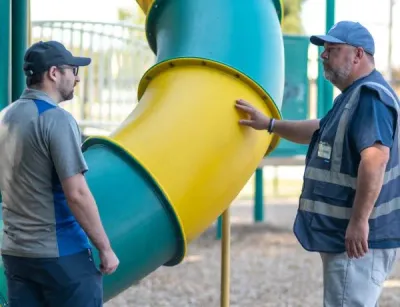
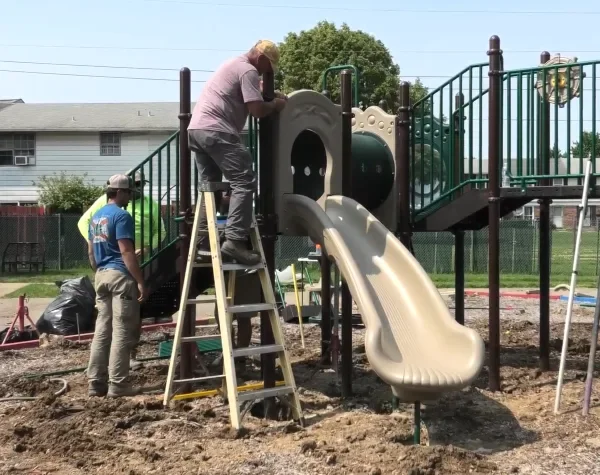
Documentation Is Often Treated as Secondary
For many public playground projects, documentation is viewed as a formality.
Inspection reports are filed. Maintenance actions are noted informally. Records are kept until the playground is opened and operating without incident.
When everything appears to be functioning normally, documentation can feel administrative rather than essential.
However, documentation rarely matters most when conditions are ideal.
It matters when questions are asked later.
Why Documentation Becomes Critical Over Time
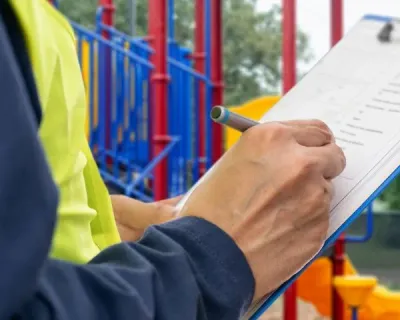
As playgrounds age, physical conditions change.
Surfacing settles. Equipment shifts. Drainage patterns evolve. Wear accumulates unevenly across the site.
When these changes are identified during an inspection, audit, or review, documentation becomes the primary way agencies explain:
- What actions were taken
- When conditions were last evaluated
- How maintenance decisions were made
- Whether issues were identified and addressed proactively
Without clear records, agencies are left explaining conditions from memory rather than documentation.
Inspections Do Not Evaluate Conditions Alone
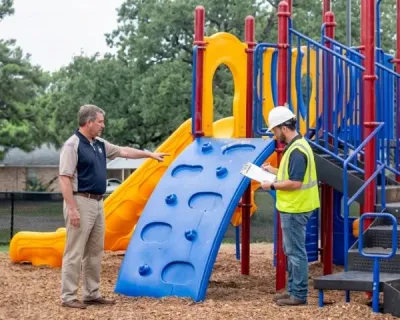
Inspection outcomes are not based solely on what is visible at the time of review.
Inspectors, auditors, or reviewers may also evaluate:
- Prior inspection findings
- Maintenance logs
- Surfacing replenishment records
- Corrective action documentation
In public and school environments, documentation often carries as much weight as physical condition. Missing or incomplete records can create exposure even when conditions appear acceptable during inspection.
Why Documentation Gaps Are Identified Late
Documentation issues often go unnoticed during routine operation.
When a playground is functioning without complaints or incidents, recordkeeping can become inconsistent. Informal maintenance actions may not be logged. Minor issues may be addressed without documentation.
These gaps become visible only when:
- An inspection raises questions
- A complaint prompts review
- An incident requires reconstruction of events
- A board or external party requests records
At that point, the absence of documentation becomes part of the issue.
Documentation Supports Defensible Decision-Making
In public environments, decisions are often evaluated after the fact.
Documentation allows agencies to demonstrate:
- That maintenance was planned and performed
- That conditions were monitored over time
- That decisions were made using available information
- That issues were not ignored or deferred without consideration
Without documentation, even reasonable decisions can appear reactive or unsupported.
Why Documentation Is Harder to Recreate Later
Documentation cannot be recreated accurately after conditions change.
Once surfacing is replenished, equipment is adjusted, or corrections are made, the original condition no longer exists. Without contemporaneous records, agencies cannot show what conditions were present at the time decisions were made.
This creates a gap between action and explanation that is difficult to close later.
Documentation Is Part of Long-Term Stewardship
Effective documentation is not about volume or complexity.
It is about consistency.
Routine, simple records that capture:
- What was observed
- What action was taken
- When it occurred
provide a defensible timeline that supports agencies during inspections, audits, and reviews.
Playgrounds that remain defensible over time are those where documentation is treated as part of stewardship—not an afterthought.
What This Means for Public Agencies
Public playground success is not measured only by physical condition.
It is also measured by the ability to explain decisions calmly and clearly when conditions are reviewed later.
Agencies that prioritize documentation alongside maintenance are better positioned to:
- Respond confidently during inspections
- Address questions from boards or the public
- Demonstrate proactive oversight
- Reduce exposure when issues arise
Documentation does not prevent change.
It provides context when change is evaluated.
Final Perspective
Most documentation is created when nothing appears to be wrong.
Its value becomes clear only when conditions change.
Treating documentation as part of long-term responsibility allows public agencies to manage playgrounds not only for safety, but for defensibility over time.